Tāmaki Makaurau is a large region of Te Ika-A-Māui and it holds a great many people of this country Aotearoa New Zealand. 2021 is not a year that is popular to discuss; it holds the collective memories of the Last Great Covid-19 Lockdown, and while I also prefer not to dwell on those times, we must look to that 2021 Spring to understand how the obedient people of Auckland became disillusioned with its Government and will likely vote them out in the coming October 2023 election.
As a reminder of the 2021 Covid context this was after we had eliminated the Alpha variant from our shores in 2020, hence winning our freedoms back and enjoying an awesome Summer, and was the year that the vaccine began rolling out (before 2021 any chance of a vaccine was remote). It is also the year that the more virulent Delta variant entered New Zealand, which caused the nationwide August (2021) lockdown. Although we didn’t know it at the time, the last day of this year would dictate the vibe of 2022: the first Omicron case emerged on New Years Eve.
Auckland, being the largest city and main international hub, was always prone to more cases of Covid than any other region. The spatial injustice is reasonably well understood however I won’t here go into the details of whether policies could improve this inequity. Criticising Covid policy is easy and mostly pointless or innappropriate with hindsight, and I greatfully acknowledge that the New Zealand Government made fantastic decisions under extreme uncertainty throughout the pandemic… until somewhere between the 16th of October and the 19th of November 2021. The events that unfolded during this time window is where the Auckland Separatist Movement began. This is a silent Movement, so silent that most Separatists are not even aware of their own involvement. We can, however, see evidence of the Movement’s effects in politics since its founding. I didn’t notice my own joining of the silent resentment until a full year later, when I saw the lasting consequences of Wellington’s decisions on Aucklander’s lives. Exploring the wage subsidies, vaccine mandates and vaccine passes are all complex policies that need their own space, and therefore we will focus on just the Spring 2021 lockdown here and leave the rest for another time.
I was reminded to write about my perspective of spending the Spring of 2021 in Auckland because we have, in the past few days, enjoyed some fine Spring weather now in 2023. We have left the cold of Winter and are enjoying warmer days, louder birdsong and a greening natural world. These changes have strong emotional effects on people, and enjoying them this year prompted me to reflect on what I observed in myself and my students last Spring (2022). It was the second half of semester, coming back for Week 7 in early September, when I personally felt unusually dismal about teaching. My lifelong passion is to teach, so I was quite surprised to find I wasn’t feeling enthusiastic to be going back into the classroom. Upon returning I found that my students were experiencing the same feelings. The mood was down, and no one wanted to learn anything in that second half. After a couple of weeks I realised that spending time learning in a classroom was not the problem; it was that we were sacrificing being outside and spending time socialising. The change in Season had brought an unusually high switch of attitude, like everyone around me hadn’t enjoyed the benefits of New Zealand Spring in… over two years!
The lockdown in question had five or so rule variations, and looking back they are confusing and complex. We started with Level 4: the most extreme where most people were not travelling outside of their home even for work. There were exceptions, and because Auckland had been through many rounds of these it seemed the work exemptions were becoming increasingly common. The timber merchant had to be open because some of their customers were essential, but they would therefore serve any customer using their exemption. In manufacturing it was a common joke in the industry that we are so interconnected that everyone is essential to at least one essential business somewhere down the line. Level 4 gave way to Level 3, which I still consider a lockdown as it upheld the most punishing parts of Level 4: no leaving the home for anything other than work and groceries. These two settings (with two additional adjustments to Level 3 throughout) would be held over the Auckland region for what ended up being 15 weeks. We started our lockdown in Winter and ended it in Summer. Throughout we were banned from in person socialising in any setting (with one hilarious exception that will be explored later) and were unable to enjoy the natural world. As with all lockdowns we were permitted a daily walk in our local suburb; this is not a substitute for normal city life.

In the Winter month, our first month of social hibernation, we were joined by the rest of the country three days later than ourselves. The last day of August moved the country down to Level 3 (back-to-work-but-not-to-play mode) while Auckland and Northland (who moved down just days later) remained at Level 4 (some-can’t-even-work mode). Even at this point we were in this together: my friends in Wellington and Christhurch complained of much the same problems at Level 3 as we had at Level 4. However the seeds of resentment began when on September 7th, when New Zealand moved to Level 2 and therefore effectively out of lockdown (work-play mode) but leaving Auckland in the most restrictive Level 4. At this stage we had been isolating for 22 days, a shorter stint than the original nationwide Level 4 lockdown of 2020 which eliminated the virus completely from the country. Comparing the Auckland situation with that of our Country was frustrating, but in these early days there was a feeling of martyrdom, that we were making a sacrifice for the good of New Zealand. We continued our isolation to protect the vulnerable and allow the rest of us to restart their new normal.
During this time there was also a race to vaccinate the population, and on the 16th of September we were given a goal: 90 percent elligible population vaccinated would be enough. We weren’t explicitly told that this new official target was the new lockdown release lever, however it was implied at this point that vaccination was our path forward in addition to elimination. This seemed like a new goal for the isolating Aucklanders to focus on: getting vaccinated might make this end sooner. We were allowed back to work but still without socialising on the 21st of September, marking a Level 4 stretch that matched the original 2020 lockdown. Still unreleased, the season had turned and Auckland was enjoying Spring weather but empty public spaces. It must be noted that it was never officially the 90 percent vaccination rate that would release Auckland from the lockdown, but it was certainly interpreted that way by some from the 16th September announcement. It was further alluded to in some more direct messaging on the 3rd and 4th of October, where the Prime Minister Jacinda Ardern announced a small region lockdown due to local cases and said “If we had a vaccination rate at 90 percent or above in either Hamilton or Raglan, it is highly unlikely that we would be here today announcing level 3 restrictions.“. The next day Ardern explained in a long announcement that vaccination rates are a key factor in lockdown settings. The announcement needs to be read in full here to really understand how explicit the 90 percent vaccination rate was being used as a target for ending the Auckland lockdown, but as a few key takeaways:

“…vaccines will be able to make an even bigger difference. They won’t be the only tool we need, but they will be able to act as a form of individual armour, which means we won’t have to rely solely on restrictions like alert level 3 or 4 to act as a barricade for us. But while we’re transitioning from our current strategy into a new way of doing things, we’re not there yet. We need more people fully vaccinated across more suburbs and more age groups.”
PM Jacinda Ardern
On decreasing lockdown levels using the new adjusted settings “movement to each phase will be reviewed weekly. We’ll need to assess the impact of each before making further alterations, but ongoing increases to Auckland’s vaccination rates will also be essential to giving us confidence.”
PM Jacinda Ardern
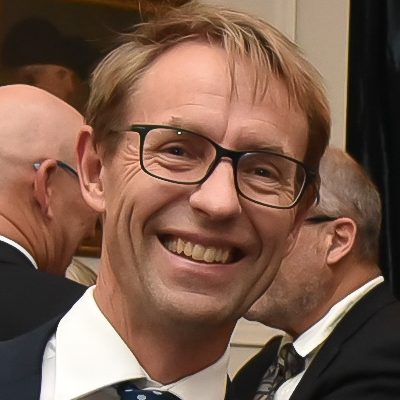
“…it’s great to see that vaccination rate still climbing up. We want to, obviously, see it over 90 percent.”
Dr Ashley Bloomfield
In response to a question of whether an additional two months of Auckland lockdown will be required: “That’s the time frame for us to achieve our ambition around vaccination being higher than 90 percent double vaccinated, and then, of course, it’s another couple of weeks when people then have that full protection, full immunity. So this is the period of time, really, that we want to do that in. I’m sure, like everybody—particularly in Auckland—we’re looking forward to a summer where we can enjoy freedoms, and our ticket to that is vaccination. So the next four to eight weeks, into early December, is critical to get our vaccination rates up.”
Dr Ashley Bloomfield
You might forgive me, then, when I watched that 4th October announcemnt live from my home and interpreted the policy to be a 90 percent vaccination rate in the eligible population as a requirement for the Auckland lockdown to end. Those who also misinterpreted this announcement were inducted in the silent Auckland Separatist Movement from this point.
Early October is also the point where Aucklanders were permitted to use public outdoor spaces provided they remained socially distant from everyone else and were in groups of ten or less people from two or less households and also socially distanced within their group the entire time. This concession was greatly appreciated, however it was distinctly uncomfortable to utilise. I only went to Long Bay beach on that first picnic-permitted weekend, and unfortunately the popularity of that beach meant an hour of searching for a park (private transport was recommended), and once there the people were either not socially distancing at all or were very grumpy. After so much time alone I, like many Aucklanders, stayed in my bubble and didn’t use the picnic concession very often. Auckland resentment levels rose again knowing that some people could now effectively evade lockdown restrictions, and only diligent rule follewers like me were still being quarantined.
With a new national number to obsess over our attention turned away from case numbers and towards vaccination rates. Auckland was a front runner immediately; we were the regions being punished for not being vaccinated and therefore had strong incentives (aversion to imprisonment) to get to 90 percent. At this time I misinterpreted the target again, possibly intentionally as I was now desperate to be free, and focused on the first dose rates initially. All three Auckland District Health Boards achieved first dose 90 percent on the 7th of November. It is from this date until our freedom in December that the resentment felt in Auckland became boiling hot. Driving was erratic even by Auckland standards, despair was replaced with the rage of a caged animal and we began a cultural witch hunt of the vaccine hesitant that continued for years afterwards, the price of which would be paid by society in obscure and surprising ways down the line. We achieved our double dose target on the 19th of November, but the 2nd of December was the first day out of lockdowns and into vaccine certificates, where vaccinated people were released from their isolation. The delay doesn’t seem too long, but every day of additional lockdown was worse than the last and extremely costly. Delaying 12 days, almost two weeks, from when we achieved the stated goal was too much for many Aucklanders. We had already obediently served for some 13 weeks and were asked to do two more without any target or goal to achieve.
I believe that the intention was to allow time for implementation of the vaccine pass system and give time for other regions to catch up their vaccinaton rates. The former reason is not enough to use emergency powers to isolate a city, and the latter switches the incentives so that those being punished are not in control of removing the punishment. What we do know is that keeping Auckland at Level 3 was not in the best interests of the public health of New Zealand. Prime Minister Jacinda Ardern is quoted on the 15th November as saying “…you will have heard me indicate today [is] that there is a strong view coming through from the Ministry of Health that we should consider moving to the protection framework earlier, because it provides greater protection for New Zealanders than we even see with the current alert level system.”. The new system was a better fit for purpose, and this was known to the Government on the 15th of November. It is therefore clear that the additional time spent in lockdown was an incentive to drive up vaccination rates; a punishment for all (Aucklanders) brought about by the few (South Islanders).
Aucklanders waiting for the South Island to get its vaccination rates up so we can visit them is absurd; those regions should have been placed in lockdown themselves until they obeyed and Auckland should have been free to travel to other vaccinated regions, handing over our pent up holiday demand money to fellow obedient cities. Instead we waited those extra 12 days (the regional border actually didn’t open for a further 13 days)) and then began the great punishment of the vaccine refusers.
The traffic light system that replaced lockdowns effectively freed everyone that could prove they did their part and took the vaccine. Those that didn’t remained excluded from many societal benefits. Looking into these effects must be reserved for another time, however it may be noted that a large protest occured in March the next year over these restrictions among other greivances related to Covid.
What has happened is now confined to the past. I have no interest in criticising every mistake made during the Covid response. It is only the additional November days of 2021 that Auckland spent in lockdown alone that I would like to highlight here, because this is the inflection point of public opinion in Auckland. We agreed to make sacrifices necessary for the health of New Zealand, and we agreed with the decisions made up until that month. The Government had grown comfortable with leaving Auckland in its new normal and did not fully appreciate the cost it was levying by delaying their decisions. Every individual day in lockdown is costly; the last more than the first. We felt betrayed after doing our duty, and our resentment of a distant Wellington bureaucracy roared into life.
From this point we see a fall in Government approval rates. In a 26th September ending poll 57% percent of responders thought NZ was heading in the right direction against 32% thinking the wrong direction. This favourable approval of NZ’s direction dropped over the next three polls to the point where a 19th December ending poll reversed the trend and had marginally more responders think New Zealand was heading in the wrong direction than in the right. The highs of that September 2021 poll has not been achieved since. This is clearly an imprecise metric for describing changes in attittudes, however the marked drop in favourable opinions about New Zealand’s direction was not seen during the 2020 Level 4 lockdowns; the polls held steady at a minimum of 70% thinking the right direction versus a maximum of 20% thinking the wrong direction. This is not an Auckland specific poll either, therefore I would contend that the change in favourability was more pronounced in the locked down Auckland region, and their responses would be weighing down the results of late 2021 and beyond.
Similarly we also see a reversal of the voting intentions of respondents over the Spring lockdowns. The same two dated polls from above reveal that pre Lockdown sentiment was 55% Labour party lead vs 39% National party lead preference and then after the Auckland lockdown had run ts course became 44% Labour party lead vs 50% National party lead preference. Political preferences can’t ever be boiled down to one issue so once again this metric is imprecise in its usefulness to my point, however the inflection can at least be observed here as well. Comparing this poll to the same period of the 2020 Level 4 lockdown we would have to look at this poll showing voting intentions for all parties rather than the above two party option. If we just look at the incumbent dominant governing Labour party intentions then our 2021 event shows a drop from 45.5% to 35.5%. The 2020 event shows Labour voting intention of respondents to be from 42.5% to 56.5%. Where the first large lockdown held an increase in voting intentions by 14%, the second Auckland only lockdown held a 10% fall.
This inflection point in attitudes is difficult to prove concisely, however I contend that the events of Spring 2021 are the precursor to an unfavourable election outcome for the incumbent Government. Aucklanders have not shaken their resentment, even if they have forgotten where it originated. We also later elected a Mayor who openly despises Wellington bureaucracy after an election campaign that included vitrually every candidate invariably speaking unfavourably about the central Government (see this great article here).
The Auckland Separatist Movement started in October 2021, and it will attempt to overturn this Government in October 2023. Mayor Wayne Brown is now the chief Auckland Separatist, and I wonder if the resentment continues to build will Aucklanders begin openly discussing a council driven reclamation of tax revenues? I write this here only to serve as a reminder of where exactly this resentment was born.
 Flynnteresting Thoughts
One response to “The Auckland Separatist Movement”
In relation to how the British government sought to use fearmongering with lockdowns and vaccination rates, it does seem similar to a parent saying they know best and to just shut up and do as told. I’ll never forget Jacinda’s words when referencing those that hadn’t vaccinated themselves, ostracizing and treating them like second class citizens.
LikeLike