There are concerns that those working in unpaid labour roles (often childcare and often women) are unfairly disadvantaged. Raising children requires time out of the workforce which delays career advancement and pauses income earning. There are means tested benefits in New Zealand to assist caregivers and a universal Early Childcare Education support that covers up to 20 hours per week for children up to 5 years old. This support helps caregivers with childcare and gives them the opportunity to pick up paid employment.
I suggest that to help close the gender wealth and lifetime income gap then the Early Childcare Education support scheme is increased universally to 50 hours per week for all children up to 5 years old. I do not believe means testing this support is in the interest of society because the support targets gender equality and needs to allow all caregivers to return to full time paid employment after maternity/paternity leave has been exhausted. This will make more productive caregivers and improve the income of the individual and country. Caregivers who can afford the luxury of raising their children without needing paid employment are welcomed and encouraged not to use the support; this would mean voluntary entry into unpaid labour which is an important role and not to be diminished by this funding extension.
Furthermore I also suggest that to continue to support caregivers of children in state schools who cannot be alone at home (years 1-8), once again typically women, funding should be available universally for up to 10 hours per week for these children. This funding would be for after or before school childcare/education provided by the state school itself or a private provider (many already exist and include churches). This is to allow for dropping children off before a full shift of full time work and picking them up when it is finished. This will help permanently level the employment playing field between caregivers of children and unencumbered workers.
Additionally, the current government funded school lunches program covers lower income schools and is funded for all students at the targeted school. I suggest that the funding be used for funded school breakfast clubs instead which are voluntarily entered by students going to school at 8am for the state breakfast. Parents who wish to feed their own children may simply drop off their children at 9am for standard school starts. This puts the choice back in control of the parents and also utilises the childcare support hours used in the above suggested policy. Ideally the same children that attend breakfast club may also be given a small lunch during their breakfast to be eaten at lunch.
“Never let your sense of morals prevent you from doing what is right” – Isaac Asimov, Foundation
In 2019 and 2021, New Zealand used a unique policy to ensure equitable treatment of people during a time of transition between rules. Where previously there were certain firearms that could be bought, owned, possessed and used in this country, later they would become illegal weapons. Possession of these specified types of firearms would, after the new rules were implemented, carry a punishment of five years in prison. Transitioning between these two states posed an equity problem; people who had operated under the previous legal market did not anticipate the sudden policy change (it was not signaled), and may have spent considerable amounts of their money on products that would soon become contraband. Because in the previous legal state these products were allowed to be traded, then the loss of assets that these people were to suffer from the law change was an unforeseeable and unstoppable result of Government intervention.
The transitional policy used to ensure both compliance from the gun owners and an equitable outcome was the New Zealand Police Gun Buyback scheme; a period of time where owners of the soon-to-be illegal weapons could surrender them to the Police in exchange for money. The valuations of the firearms were heavily scrutinised, and gun owners complained that they weren’t getting the fair market price, however the scheme itself was also criticised, as opponents declared that any compensation is too much. The weapons in question were always ethically ambiguous, the opponents argued, and traders in these killing machines shouldn’t be rewarded in engaging in a hobby that facilitated mass killings. It is important to note here that the policy change was in response to the Christchurch shootings, where 51 people were killed. It should also be noted that not all guns were being banned.
Compensation for the release of products that will be made illegal by the Government is a pragmatic solution to encourage compliance, and the Gun Buyback scheme of New Zealand is considered by many to be a successful policy. However every time this type of compensation is used, it is heavily criticised. In history, there was a time when this policy was used in the freedom of slaves, and it is this context that will be explored here.
Compensated emancipation involves the Government effectively buying slaves off of slave-owners and then immediately freeing them. The same pragmatism is pitched against an ethical dilemma as the Gun Buyback scheme. This slave freeing policy must be analysed in the context of the time; like the now illegal firearms, slaves were a legal-to-own asset which provided income for their owners. This asset would, through Government intervention, become contraband in the future, and those who had invested in flesh markets would be financially punished due to an unforeseeable and unstoppable change. Compensated emancipation was only used in a single District of the USA, but was more widely popular among colonial powers. Below I will briefly explore the United Kingdom’s and United States of America’s compensated emancipation schemes, although it must here be acknowledged that the context of these policies are complex and I will be using an admittedly narrow economic paradigm to cover a single policy through-line.
The United Kingdom passed the Slave Compensation Act in 1837, which followed from the Slavery Abolition Act of 1833. These policies freed slaves owned in the British colonies and involved a payment from the Government to the slave-owners. The compensation was expensive and contributed to financial instability at the time, and today many people have decried the policy as unethical. Some have suggested that reparations to the slaves should have occurred rather than compensation to the slave owners. While these outcries are completely understandable, it must be acknowledged that compensated emancipation was seen as a required concession in order to get the Acts passed in parliament. Slave-owners were part of the voter (and capital) base and had their own interests to protect, and the nature of democracy required an equitable transition for the change to be effected. It could be that insisting on no compensation would have caused the Acts to fail in parliament, causing slaves to continue in their lack of freedom for longer than otherwise. If that were the case, the cost of refusing to compensate the slave owners could be measured in continued suffering of the slaves. Unfortunately we cannot ever know for sure if the compensated emancipation policy really was required to ensure compliance and an earlier emancipation date, and while it is suggested here it may not be the case. The United Kingdom’s abolition of slavery took many decades to be completed, and the Acts mentioned here were near the end of this transition away from a slave economy. Although the transition can’t be considered a smooth one, in contrast to the United States of America the UK’s policies were fast, equitable and efficient.
The USA did occasionally have advocates for compensated emancipation, however history did not play out with this particular policy as the prominent solution. In 1861 the American Civil War began, with the military conflict originating in a disagreement about slavery between the Northern and Southern States. The Union (the Northern States) wanted slavery to be abolished, and most Union States at the outset of the war had already emancipated their slaves. The Confederates, however, were largely slave owning States which wanted to maintain the status quo and seceded from the Union and began a civil war in an attempt to achieve this. The war has a detailed and complicated history, and its reasons for starting, continuing and ending cannot be summarised succinctly with only the paradigms of slavery policy and economic conditions.
With regards to transitioning from a slave based economy to a free labour economy, however, it is reasonable to see the Civil War as the price paid for this transition. With that framing in place we may see how compensated emancipation would be a substitute policy for military conflict. Perhaps if the Union had offered to buy every slave in the Confederacy for a fair price and have them freed, the war may have been avoided. This assumption comes with complications, as it is possible that the military conflict was inevitable, however an attempt at paying for the cost of the Confederates economic losses form emancipation just might have reduced the cost of war. This leads us to the purely academic question of whether the cost of compensated emancipation would be greater or less than the total cost of the Civil War. It has been suggested that a transfer payment would have been more cost efficient as long as this payment were a fair valuation of the slaves and the entire Civil War was avoided.
As with all speculations of alternate history, we will never know for sure the outcomes of different decisions. Instead, we can look at where compensated emancipation was actually used, and in regards to the USA, only the District of Columbia (DC) paid slave owners for their losses of human assets. The context of this decision is that although the Union was fundamentally abolitionists, it included four slave owning States; Delaware, Maryland, Kentucky and Missouri. The District of Columbia borders Virginia, an enemy Confederate State, and Maryland, a slave owning Union State. DC is the capital territory/city of the USA, and therefore houses the nation’s Congress. Outside of these four States, the Northern States were already without slaves, and these border slave owning Union States were all in a strange circumstance at the outset of the Civil War. Invariably all four of these border States had freed slaves in their territory by the end of the war, and none of them used compensated emancipation excepting DC (which is not a state; its territory was previously donated by Maryland and Virginia to be the capital of the USA).
The Compensated Emancipation Act of 1862 enabled slave owners in DC to claim money based on a valuation of their slave assets, much like the transaction described in England above. At this point in DC’s history slave ownership was already rare; abolition sentiment was rife and it was morally and religiously taboo to partake in the market. It is important to note that legal emancipation came long after the market was considered repugnant by most people. The transition to a free State was financially supported by the Government for a couple of important reasons: Firstly, there were people who had already been freed that had subsequently purchased their family/friends who deserved compensation, and secondly, there were also people that had inherited their slave assets and used their income to fund their advanced age retirement. These retirees would become instantly impoverished if their retirement income source were confiscated without compensation. This negative outcome was eventually enacted on the slave owning Confederate States and enforced when they lost the war. To ensure continued loyalty, the Union used compensated emancipation in DC so that the unionists wouldn’t be punished like the confederates. As a condition of claiming compensated emancipation, the soon to be ex-slave owners were required to state their loyalty to the Union, which reveals to us the political aspect of this transfer payment.
Those that insist compensated emancipation was an erroneous policy are welcome to that opinion. I contend that the policy was pragmatic at the time and may have been the most cost efficient method of transition away from slavery. The New Zealand Gun Buyback scheme is the same policy applied to firearms, and this was enacted in the 21st century; I suggest that despite being controversial, it was appropriate given the context of transition. Economics often defies common sense, and it is difficult to reconcile the two. Usually common wisdom, general ethics and sensibility are the best heuristics we have to assess the optimal course of action, however there are exceptions, and economics lives in the exceptional space.
The New Zealand Government is currently considering He Waka Eke Noa and contrasting it with integrating Agriculture into the New Zealand Emissions Trading Scheme. NZETS is the most cost-efficient vehicle for emissions reductions; it will achieve its stated goal.
I suggest that as New Zealand will be a world leader in integrating agriculture into a national emissions trading scheme, we have the opportunity to set the applicable boundaries. Currently emissions are captured by the NZETS at point of source: for dairy that is the production of milk but for petrol that is consumption (as the combustion releases the emissions). This means exported petroleum products are not captured by the NZETS as it is the importing country that creates the emissions. If Dairy is added to the NZETS the current policy intention is for all exported dairy products to be captured by the NZETS: this is an accounting line in the sand drawn on a science basis however I suggest that the economic basis would attribute emissions to the importing country like we do for petroleum.
This would be a simple accounting change that would mean the 95% of dairy that is exported would not be in the NZETS and would have no surrender obligations. The justification would be to keep our exports on a level playing field with it’s competitors. If, say, the European Union wanted to, they could add NZ imported dairy products into their ETS on import (they wouldn’t even necessarily have to add their domestic dairy production into their scheme) but it is their consumers that ultimately determine the emissions of their consumption. If we export to a country that has no relevant ETS then we would sell dairy to that country with no capture mechanism, as that country would otherwise buy cheaper milk elsewhere anyway.
If farmers were communicated this policy shift they should be very willing to join the NZETS in full force in 2025 as the only ETS units they surrender would be for domestic consumption.
The implementation of this export clawback would have to be nuanced as it would risk stopping the incentive for behvaviour change that the NZETS is designed for. My suggested policy implementation would be:
The ETS would function as intended: Farm inputs would have NZETS obligations as far up the production change as possible (fertilizer at production or import). This ‘hides’ the cost from farmers but is the most efficient method for administration and behaviour change. Farm level emissions would be measured as they already are and surrender obligations would begin. Farmers would then be fully paying for every unit of emissions – at this point there would be no accounting for product headed for export or domestic consumption.
The exported product would then be eligible for receiving NZETS units upon export. That means administration of earning emissions units would be done by Fonterra or other cooperatives. The NZETS export units that Fonterra earns would then be used to increase the milk payout.
In effect, farmers would find all of their inputs would go up in cost due to emissions charging, and they would surrender their own units at farm level, however they would also receive a permanently higher milk payout to subisidise the total % of processed product headed for export. This will keep the NZETS pushing behavioural change (farmers can avoid NZETS obligations by changing product mixes to lower emissions but also continue to earn back the % export returns) while keeping administration cheap and pushing the emissions obligations onto the importing countries.
We would publicly encourage importing countries to add imported agricultural products to their ETS systems and clearly communicate the emissions of every product we export so they have the information necessary to do so, but we would not force the requirement.
On a cold Wednesday day in the Winter of 2023 a lecturer for Massey University delivered a presentation that no student heard. This presentation was not advertised, but was in a central and prominent location on the campus, in a room with glass walls and its doors wide open. Hundreds of people saw this presentation take place, and a dozen or so curious onlookers entered the room at different points of the lecturer’s oratory. In the room was a stool that the lecturer occasionally perched on, although mostly he paced slowly while speaking into a microphone connected to the speaker system in the room. Facing this lecturer was five chairs, all different types. They remained empty for the duration of the lecture, despite the occasional student coming in to listen. This lecturer was delivering a Soapbox, and his audience were the students that, for all sorts of reasons, could not access what he had to say. He delivered this Soapbox, this lecture, to no one, but a particular and explicit no one. His knowledge was shared with the missing learners from his University in a method that they could not access; only those rare curious onlookers who crossed the threshold into his glass room were educated. The lecture was not for them, but they gained the knowledge because they were in the right place, at the right time.
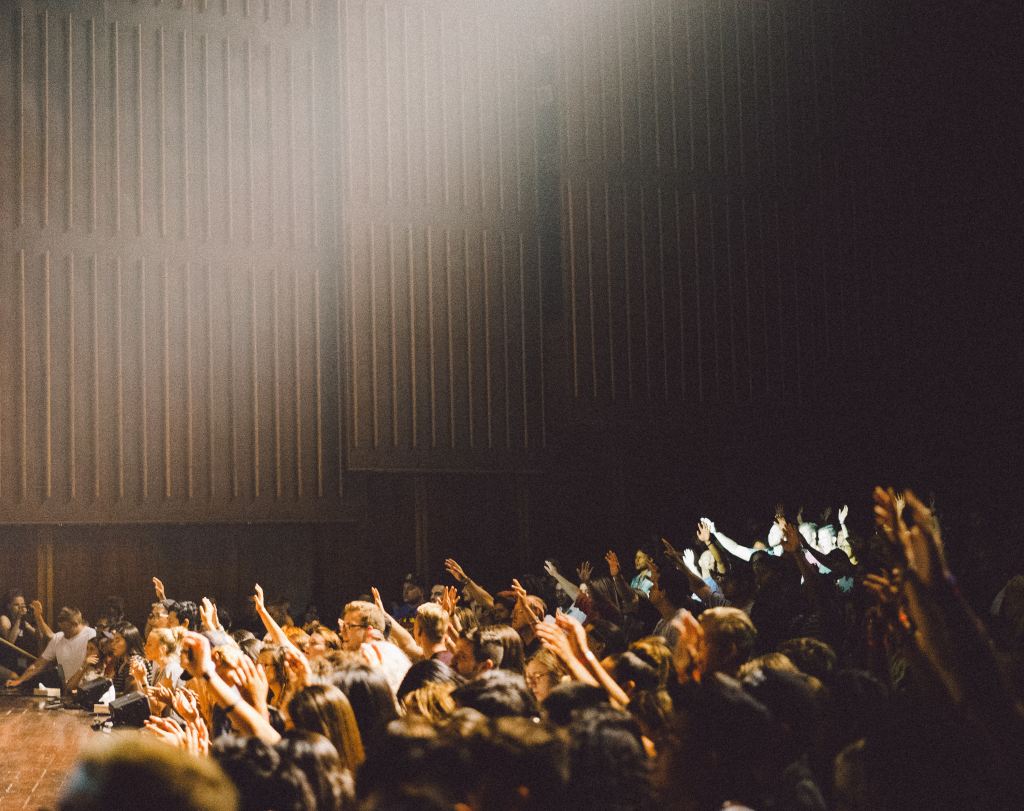
Open air public oratory, or soapboxing, is an artistic tradition that originates the way people share and debate ideas. Since people began congregating into communities of relative strangers, mostly due to the advent of cities, we have taken opportunities to express beliefs and rally allies to our causes. This has traditionally occurred in outdoor public spaces where people naturally come together for other reasons. Orators would often present to the public in parks, market squares and other areas that people are already enjoying together as strangers.
This oratory has been historically foundational in how we establish philosophies and paradigms that could reliably be developed through discourse. Sounding out ideas with others in increasing detail and discussion is how we understood the world around us, and only once writing and publishing written works became accessible to the masses did oratory lose its dominance as the primary method of cultural expansion.
Today the written word remains dominant, and the foundations of soapboxing have become digital. So what defines soapboxing and separates it from other written communication?
A traditional soapbox event would be understood from the era that particular term was coined; the late 19th century moving towards pre World War I. It was at this point in England and Europe, that the common worker upturned their soapbox crates to stand on a street corner and have ‘street meetings’. This was the golden era of the Labour movement, where reforms for worker conditions were fought for through multiple channels of negotiation and conflict, and Soapboxing was a feature of information dissemination. This soapbox was spontaneous; you would more likely stumble upon a soapbox presentation than be invited to one, and no permission was sought by authorities to hold these events. By the virtues of free speech these orators would present their views, and the only barrier to access of this information was being at the right place and the right time. This freedom to express ideas was staunchly defended, however over time there have been adjustments to this fundamental right that defends others ability to express their own views. For example it remains forbidden to insight violence in others, and to express hatred to people or groups. The rules of engagement for public discourse remain contended, and modern traditional Soapboxers often present on highly controversial subjects.
A modern, and therefore digitized and written Soapbox would be a discourse on topics that are spontaneously presented, with no particular authorised event for dissemination. Institutions do not present Soapboxes; only people do, and institutions also do not allow or disallow them either unless they have the legal right to stop such presentations. Therefore a modern Soapbox would be a private blog (like this one), a social media post of an individual’s views as well as comment threads of discussion, and perhaps a newsletter or other informational service by people for people. The information that is most valued by people was once in this very form, however in the modern era we have a new format of valued information.
This art form is the origins of the much more systematic education system that we utilise today; state primary and secondary education, and relatively privatised tertiary education. Universities still rely heavily on an adapted form of Soapboxing; the lecture. Lecturing is oratory from a qualified person delivered to students who wish to learn what the lecturer knows. This is very similar to a Soapbox, however it has been moved away from this description for a number of reasons.
Firstly, lecturing is delivered by a person, but that person is under the authority of the relevant University. This institutionalisation of delivery is important to note; lecturers are required to deliver content that the University desires to be delivered. In general, lecturers have strong academic freedoms to deliver content as they see fit, and the control Universities have over content is limited by the virtue that the lecturer is the specialist, and they know the content better than anyone else. It must be acknowledged, however, that Soapboxers have no institutional authority that requires consent for information to be delivered. The importance of this distinction cannot be overstated, and there are starkly different risks associated with each system of communication. Where University lectures carry the risk of institutionalised norms being enforced, and therefore stagnation of ideas and an unwillingness to discuss controversy, Soapboxers are uninhibited, which risks their information to in fact be misinformation, and carries a higher risk of disseminating informational hazards, conspiracy theories and propaganda.
Secondly, Universities only deliver courses that have student enrolments. Some courses are compulsory for students to enroll in a major or degree, and these course’s information is considered important by the University (and also often the Government or industry bodies), whereas others are elective, and therefore run based on the popularity of course enrolments. Compulsory courses have their information qualified by institutions, which is expressed by the first point above. Elective courses, however, involve an additional separation of University education from its Soapbox origins; the free market interfering with information. Soapboxers do engage in a free market of information in the same way as Universities, however a Soapboxer cannot be silenced because they do not draw enough crowds. In fact, traditional Soapboxers are known to continue their presentation even when no one is listening. It is this artistic distinction that is important to note; Universities silence unpopular presenters because students won’t enroll in a course. Soapboxers are incentivised socially to be silenced when no one will listen, and it is observed that a Soapbox orator develops their content based on the crowds they draw. Over time a Soapboxer changes what they say to attract listeners, and therefore in a more direct manner their information is changed by the free market. With that acknowledged, fundamentally a Soapboxer may present views that are unheeded by passers by, whereas lecturers are not offered the opportunity to express views that students will not enroll in (unless of course it is a compulsory course, which comes with the aforementioned authority of the institution rather than free market principles).
Finally, and most importantly, a lecture is not publicly available. Soapboxes are in the free world; they are on a publicly accessible blog, a street corner or newsletter. Universities privatise the orator’s information by presenting barriers to access through enrolments. Enrolling in a University course is a bundle of many barriers, the chief of which is a time commitment. This main barrier is similarly applied to all forms of education including Soapboxes, and as it cannot be avoided is an ineradicable barrier. In addition to this however, enrolling in a University course also has other barriers attached, the most prominent being the financial barrier in most tertiary educational systems. Where there are no financial barriers to entry there are often instead prior educational achievements required, like secondary school results of entrance exams (both barriers exist in some form for all Universities in New Zealand). Add to this other institutional barriers that remain stubbornly present which can broadly be summarised as discrimination, whether ethnicity, gender, sexuality, age, culture or income. These other barriers remain in University systems, and although Soapboxing has rampant controversial presentations that can only be described as discriminatory (and in some cases hate speech or misinformation), the audience members do not face individual barriers to listen to their choice of orator. In the digitised form there are no barriers at all to consuming information from Soapboxers, whereas a discriminatory lecturer may fail students for reasons beyond their merit, causing their educational access to be restricted for reasons beyond their control when compared to public information like Soapboxes. In fact, the testing element to University education, while important to qualify a student’s knowledge, is a barrier itself to accessing further knowledge held by the University in higher level courses.
With these differences, we can see that lectures from Universities carry with them risks of an echo chamber due to insitutionalised norms, catering information to mass enrolments due to a financial incentive, and providing huge barriers to access to their presentations. Practicing Soapboxes is an antidote to these risks, and although the artform carries its own problems, it should be celebrated and welcomed onto campuses (perhaps in a regulated manner). In particular, there is an opportunity for the privatised information in lecturer’s heads to be made available to the public on an accessible forum. Universities hold valuable information that people with barriers to access arguably have a right to hear, and the institution has an opportunity to counter the more radical forms of modern Soapboxing by occupying that same space with the qualified thinkers that they employ.
Discount rates affect so many decisions, I wonder how each rate is chosen in each discipline. In particular the contrast between ecologists and investors.
The FIRE (Financial Independence, Retire Early) movement adheres to the 4% rule, where you can retire if you have saved enough money that 4% of the total is enough to live off for a year. The logic is that withdrawing 4% of the total each year will be replenished by investment returns. This accounts for inflation too; I believe the estimate is an average return of 7% and an average inflation rate of 3%, leaving the 4% withdrawal rate to indefinitely retire on. Their discount rate is nominally 7% and in real terms 4%.
Contrastingly, ecologists have a different approach to discounting. Firstly there are some ecologists who believe a 0% discount rate is appropriate for ecological systems to ensure intergenerational equity (costs in the future must be fully accounted for today). I don’t see this as appropriate, as ecological systems replenish themselves and have their own form of safe withdrawal rates. However it is clear that ecological systems cannot maintain a 7% nominal discount rate as that would reduce future costs that are far away in time too much. Some impacts of climate change have already been locked in to affect humans for thousands of years, and any discount rate applied will nullify the costs past a few hundred years. It is suggested that natural resources should have 1-3% discounting applied which is lower than the FIRE movement.
Stock returns have happily averaged 7% or more in the 100 years of reliably measured time (post WW2), I suggest however that this return and therefore discount rate of productivity is not tied to sustainable economic activity. I therefore suggest that the next 100 years of stock returns will align more closely to discount rates ecologists are using, as the companies creating productivity will be increasingly bound by sustainability requirements.
FIRE followers beware: your safe withdrawal rate is based on past data and may not reflect the coming century of returns.





 Flynnteresting Thoughts