In foundational economics textbooks and courses we teach students about the Barter economy, a theoretical system where transactions can occur without an accepted common currency. I was recently made aware that some students have either been taught or interpreted their teachings that the Barter economy is the chronological precursor to our modern market economy which uses fiat currency. I am not aware of a society that genuinely used the Barter system as their main form of economic transactions before adopting a common currency and moving to a market system, although this is not my expertise and I’m sure appropriately qualified anthropologists would know of some international examples. Instead, it is observed in both Māori and First Nations people of Australia that a Demand-Share or Gift economy was the dominant system of transactions before European colonial influences introduced formal currencies. Here I will explore the differences between these systems to highlight where their strengths lie and how the modern market economy has changed how we interact.
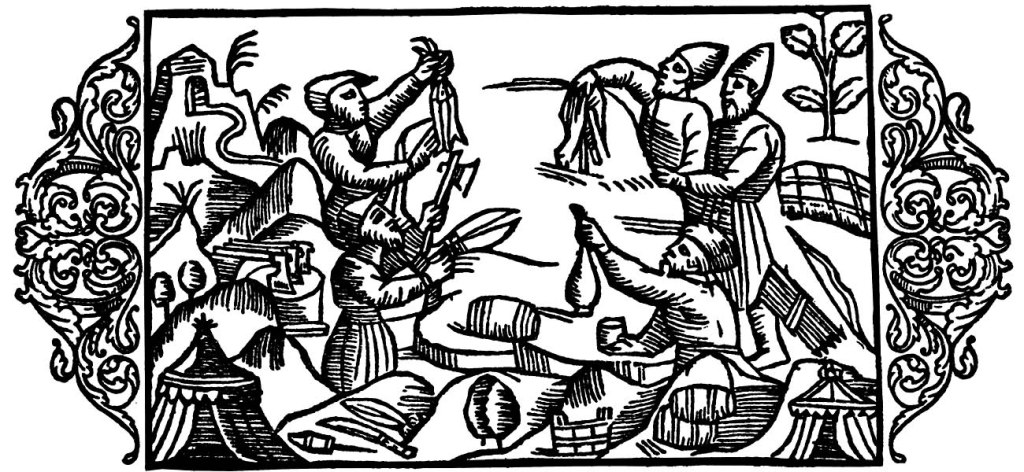
We begin with the Barter economy, as there is a good reason why this system is described in econ 101 textbooks. To barter, two parties will swap things that they own between each other at agreed amounts. For this to be possible, both parties need to have something that the other person would like to have for themselves, which is the classical requirement of a ‘double coincidence of wants’. These people also need private ownership over these things, which is implied in most economic systems other than resources in common (communally owned). Swapping privately owned goods that have a double coincidence of wants is reasonably straight forward, although some haggling may be initiated by either party. Repeated interactions make the effort of bartering lower, as familiarity of your trading partner’s preferences help you plan your resources to facilitate a trade in the future. Bartering with complete strangers might often result in no trade taking place due to the restrictions involved in the double coincidence of wants. This problem can be further reduced by engaging in bartering transactions in a market of many barterers, as this would multiply the potential trades and dramatically increase the chances of acheiving the coincidence of wants necessary. With a large enough market, it is just a matter of informational processing, taking time and effort admittedly, to succeed in making everyone better off. These costs of completing transactions can sometimes be too steep to overcome, and in this instance the party would simply prefer to be self sufficient as much as practical. A party may consist of a family or village unit of people, where the resources within the party are communally owned.
Before continuing to the Gift and Demand-Share economies, I will note that communally owned resources within groups of people is a persistent method of resource allocation and transaction. Wherever there are few enough people that strong interpersonal relationships can form a communal ownership system is likely the most efficient method of transactions. Even in modern times a family unit almost universally utilises communal ownership within the family, as children are dependent on their parents anyway and cannot contribute in a self sufficient manner. While this is important to note, it is equally important to acknowledge that communal ownership struggles to expand beyond an amount of people that can no longer hold such strong interpersonal relationships. Lack of trust in strangers compels us to hold privately owned goods, and any economic system needs to take into account interactions with the wider community at the very least. The modern market economy makes transactions a very low trust environment, which enables people to transact with strangers from across the world without ever meeting or conversing.

The Gift economy, however, is similar to that of communal ownership in that it requires some level of informal social relationships to work efficiently. Gifting things to each other also functions quite happily within traditions of family or other communal units of people. They can also help with transactions between two distinct but still connected family units, perhaps like between two different hapu that share the use of some spaces. For gifting to work, there must be repeated interactions between the parties, which means like communal ownership this system cannot help with transactions between total strangers passing through. Gifting does not have an expectation of reciprocity directly, however a healthy gifting relationship should be a benefit to both parties over the long term if they are considered equals. Equal relationships would be between two hapu unless one is significantly better off and has a cultural obligation to share its relatively more plentiful resources. Gifting between unequals is typically unequal, in that the higher status party gives more to the lower status party. In this way there is a form of culturally enforced redistribution of resources in a progressive manner. Perhaps there is a system where the lesser party is expected to give more to the more plentiful party, however that would go against conventional norms in societies I am familiar with. This resource distribution is simple but effective: imagine the hapu next to the plentiful ocean gifting kai moana to their inland neighbours after a good catch with fish that will spoil quickly. A gifting process or gift exchange between groups of people may involve some ceremony, and certainly the gifts are given and received by people representing their respective wider communities for later communal or further gifting dispersion.

Demand Share economies are very similar to gifting, and might just be a variation of the latter. Where gifting might be interpreted as the giver choosing what resource they want to part with, demand sharing would be the recipient requesting what they need from the other party. The request occurs first and then the potential gifter chooses to accept or decline. They might not have what the demander needs, or they simply might not want to part with it. Either way, the potential giver has the right to refuse the request. However this is still a culturally enforced system, and a relatively high status person is harder to decline with regards to demand sharing. First Nations people of Australia often align with demand sharing, and understanding the cultural differences is important when interacting with people living the Right-way. Two First Nations people passing each other by in the Northern Territory far from any town might still utilise demand share to significantly reduce transaction costs and rapidly redistribute resources from one with plenty to one with little. In the desert there is little environmental forgiveness, so a sharing society developed to be hospitable to each other above all else is an important and useful cultural development.
Communal ownership, Gift economies and Demand Sharing are all acknowledged systems that both continue to happily exist today and were historically dominant in societies before common currency was introduced. Barter economies, on the other hand, are not historically dominant. Bartering has always been an option of trade between two complete strangers passing through, and remains a rare but sometimes viable transactive process.
Our modern market economy was introduced alongside sweeping technological and cultural changes. Some contend that the market economy caused everything from the 19th century onwards, others insist its only responsible for either the bad or good things depending on their agenda, whereas others still claim that markets coincidentally joined the multiple revolutions at the time. I suggest that the market economy was a necessary innovation to solve transactions where trust was low, whether because of eroding social institutions or massive increases in the number of people we can economically interact with. We can now economically interact with far more people than we can socially relate to, which necessitates a common currency to solve the double coincidence of wants and a lack of common cultural expectations or trust. The complexity of the modern market economy helps deliver fantastic benefits, however it has also removed visibility of how these benefits are created. It appears that those without an economics background struggle greatly with understanding why markets are useful to people because of their abstract nature.
 Flynnteresting Thoughts